
Hot Air Gun
Ball grid array component replacement and fine-pitch SMD rework require controlled hot air delivery that precision technicians cannot achieve with manual heat sources or unregulated equipment. JCD Soldering Hot Air Guns feature adjustable airflow control, programmable temperature profiles, and digital monitoring to handle BGA rework and surface-mount component removal on modern circuit boards. Order your hot air gun from the official store and access the best price with professional-grade performance backed by manufacturer warranty.
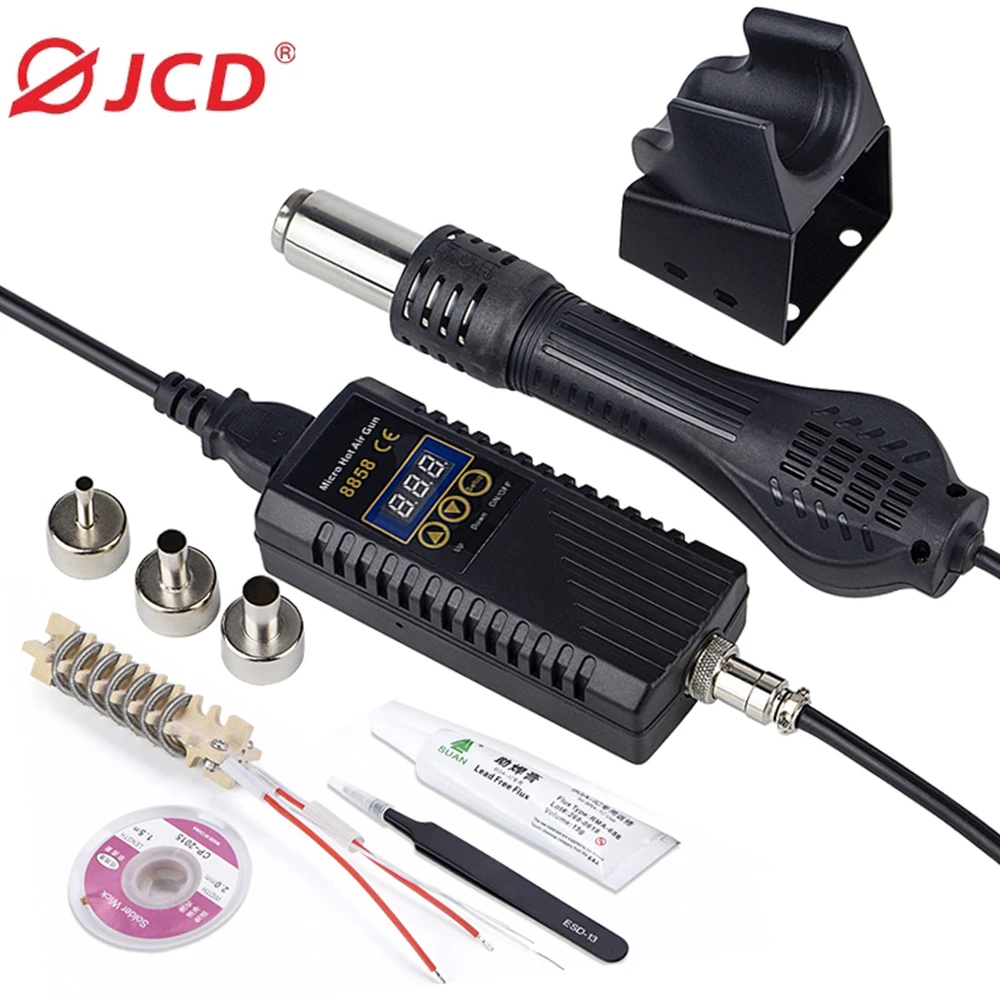
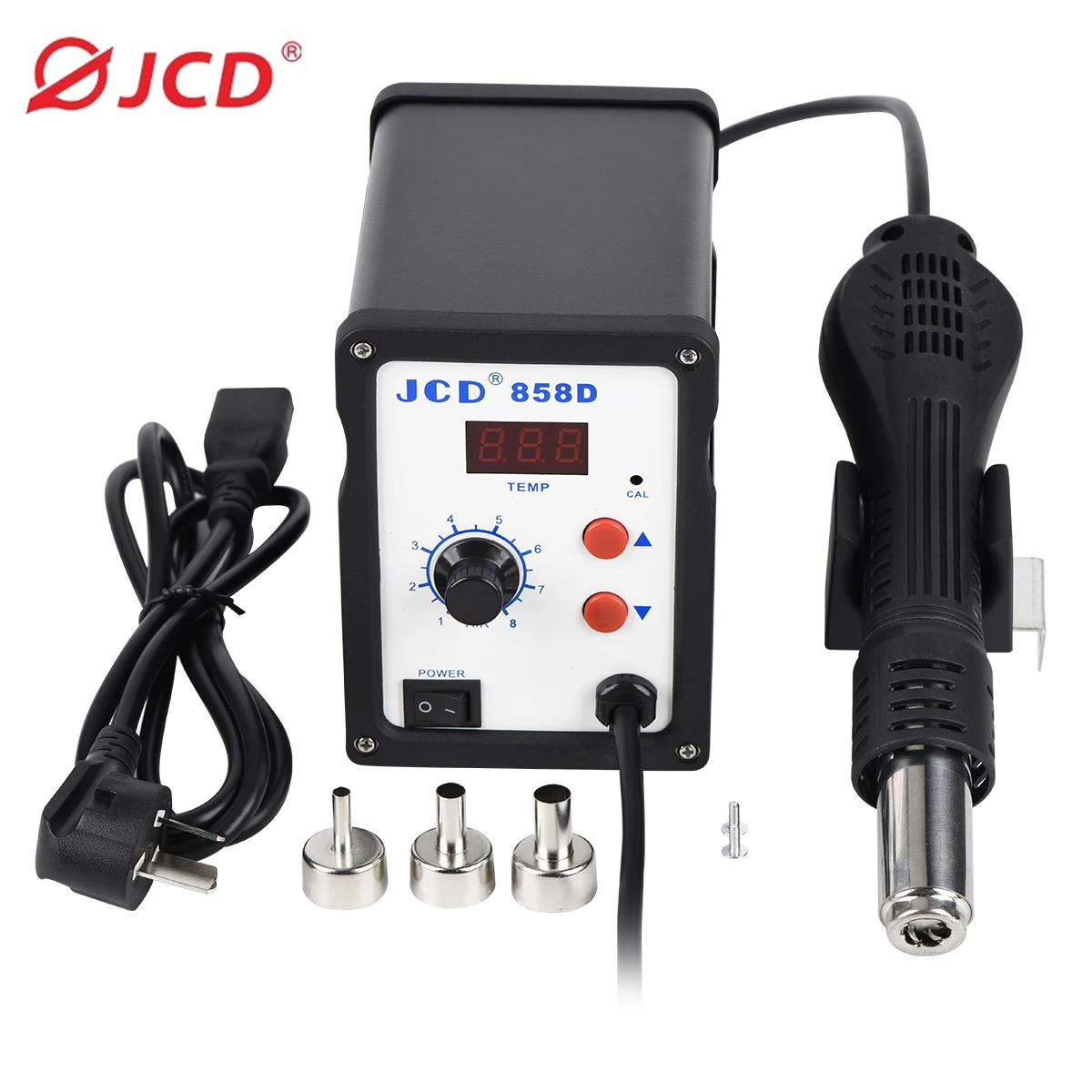
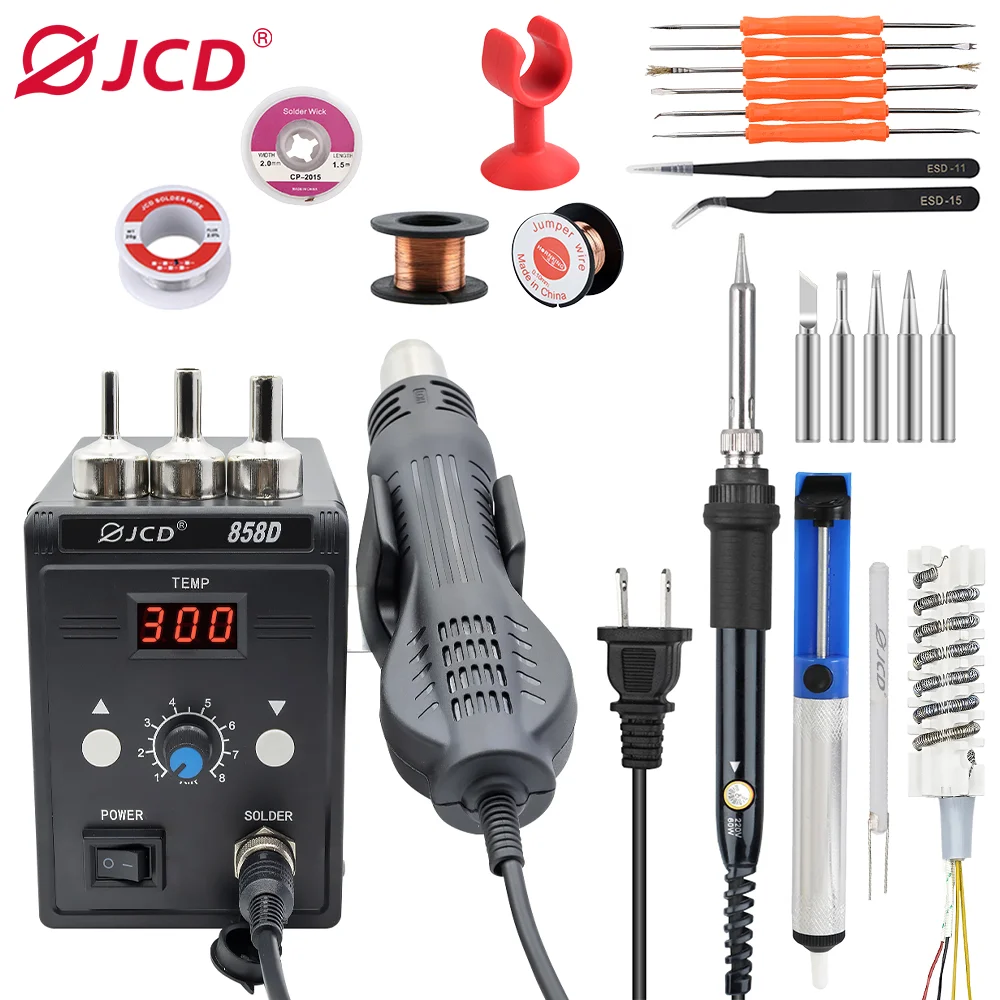
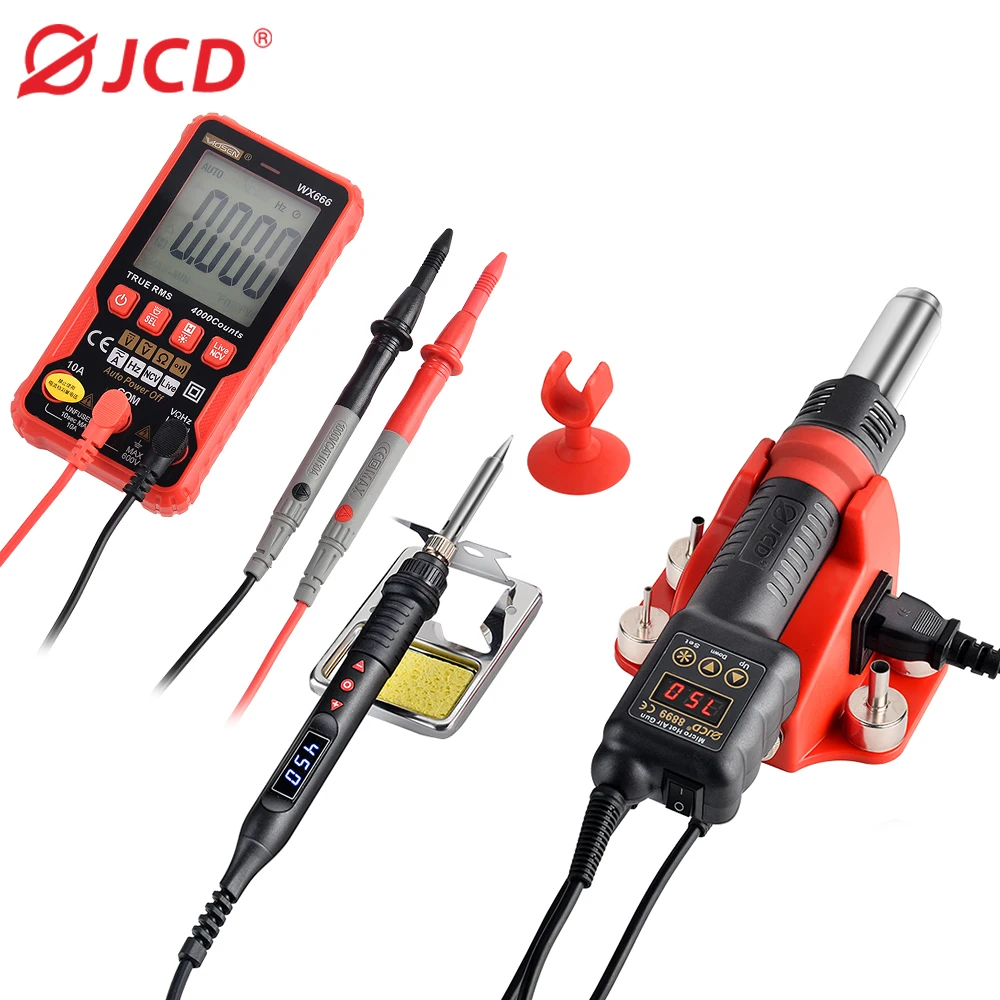
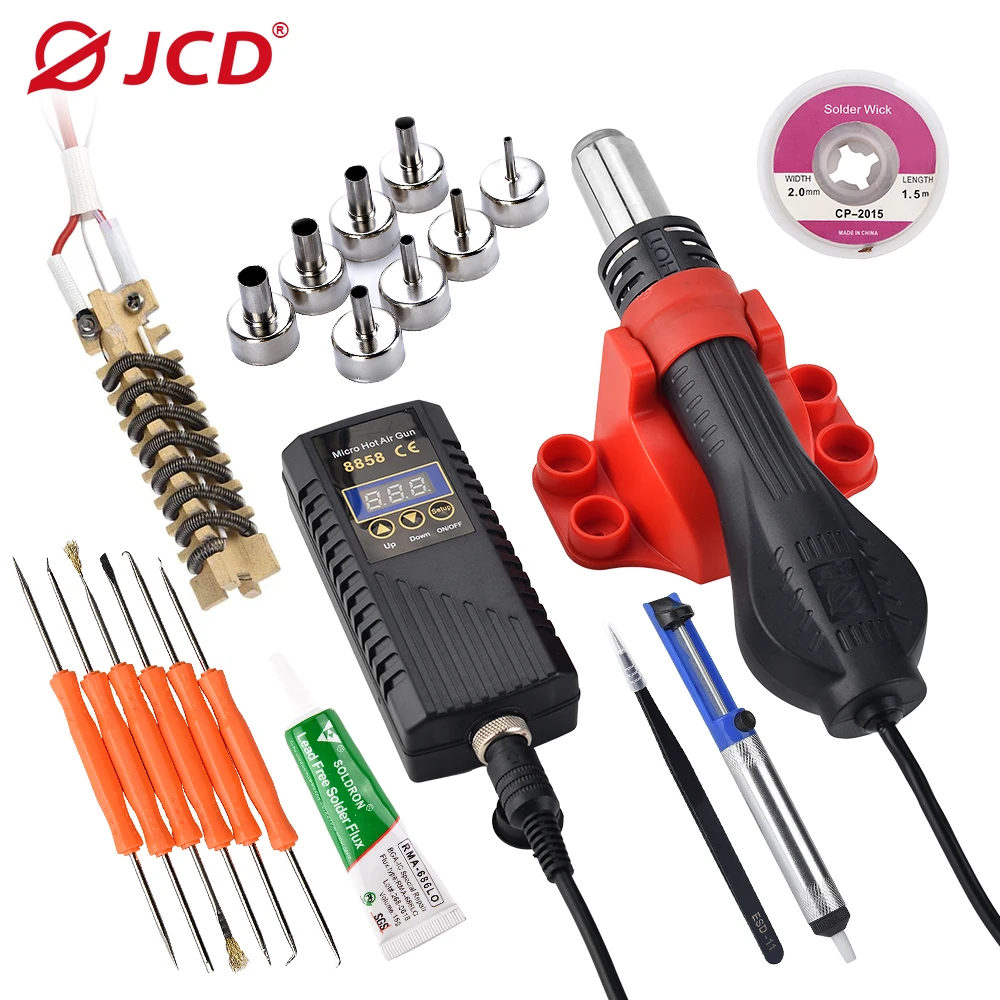
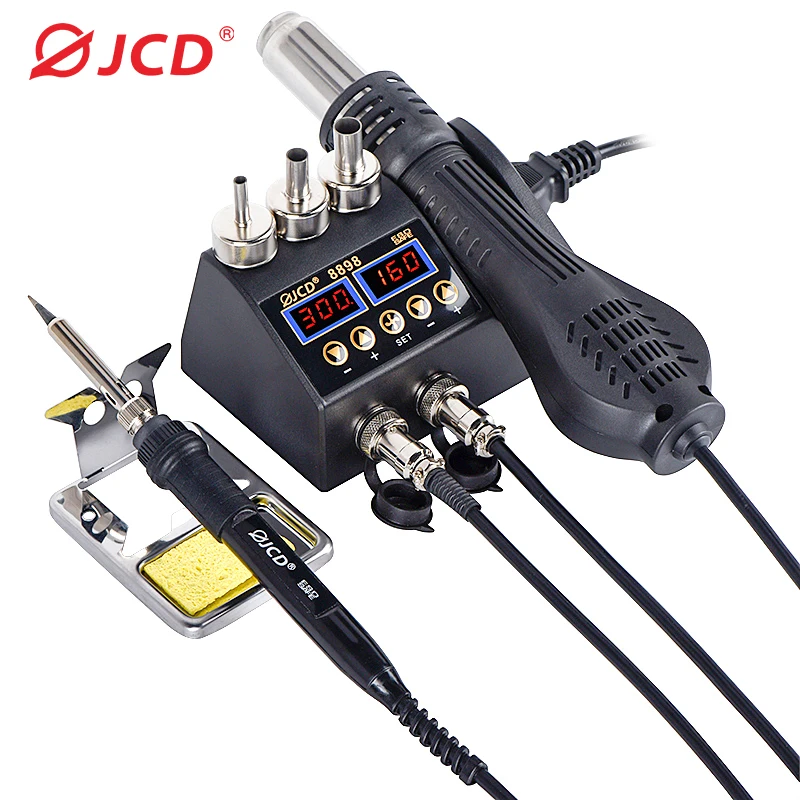
JCD Soldering Hot Air Guns for BGA Rework and SMD Component Removal
JCD Soldering Hot Air Guns deliver controlled thermal energy with adjustable airflow control to safely remove and replace ball grid array components, fine-pitch surface-mount devices, and multilayer circuit board assemblies without damaging substrate materials or thermal-sensitive neighboring components. These precision instruments generate heated air streams from 150 to 480 degrees Celsius with incremental temperature adjustment and variable fan speed regulation across multiple settings. Mobile phone repair specialists and PCB assembly professionals rely on hot air systems because thermal uniformity across the component package prevents the cold solder joints and microfractures that plague manual rework attempts. Each unit integrates digital temperature monitoring with real-time feedback loops that maintain thermal output within design specifications across sustained work sessions. The adjustable airflow feature allows technicians to focus heat directly on target components while minimizing thermal transfer to surrounding circuit board areas and neighboring integrated circuits. Compact handheld designs enable precision manipulation in tight board layouts where conventional soldering equipment cannot physically access dense component arrays. Workshop users appreciate the rapid temperature cycling and precise control characteristics that make hot air systems the industry standard for professional IC replacement and connector rework applications.
Digital Temperature Control and Airflow Engineering for Precision Rework
Heating elements rated to 800 watts generate rapid air temperature rise and maintain stable thermal output across extended rework sessions without power fluctuation artifacts. The digital display shows both programmed setpoint and actual air temperature simultaneously, allowing operators to verify thermal conditions before positioning the nozzle over target components. Proportional microprocessor control adjusts heater element power approximately 100 times per second, compensating for ambient temperature variations and preventing the thermal overshoots that cause solder paste burn-off and substrate lamination delamination. Variable fan speed adjustment ranges from 20 to 100 percent, enabling technicians to calibrate airflow intensity based on component size, solder paste volume, and thermal mass characteristics of the target assembly. Precision nozzle tips channel heated airflow into focused circular or rectangular patterns, concentrating thermal energy on BGA packages and SMD arrays while protecting adjacent discrete components from collateral heat damage. Temperature stabilization occurs within 90 seconds of power-up, enabling rapid workflow transitions between circuit board repair operations without extended warm-up delays. Lithium battery pack builders and handheld device repair technicians select JCD Soldering Hot Air Guns because programmable temperature profiles and real-time feedback deliver the process consistency required for high-volume component rework without scrap losses.
Advantages Over Fixed-Temperature and Manual Heat Sources
Fixed-temperature hot air tools lack feedback systems and generate uncontrolled thermal swings of 20 to 40 degrees during active rework, causing solder reflow inconsistencies and component thermal stress that threaten solder joint reliability. JCD Soldering Hot Air Guns employ digital closed-loop temperature regulation that maintains thermal output within plus-or-minus three degrees Celsius, eliminating the reflow variability associated with unregulated airflow systems. Hair dryers and industrial heat guns cannot provide the precise nozzle geometry or temperature stability required for professional BGA component replacement, leading to thermal damage across wide board areas and collateral damage to fine-pitch connector leads. The adjustable airflow control feature enables technicians to reduce fan speed when working near thermally sensitive components, allowing selective heat application that protects neighboring integrated circuits during multilayer rework operations. Competing hot air systems often employ binary on-off control that creates thermal oscillation artifacts, while proportional microprocessor regulation in JCD units produces smooth, predictable thermal profiles that match industry reflow specifications. Professional electronics technicians achieve consistent first-pass BGA replacement rates above 95 percent when employing digital hot air rework equipment, compared to 65-75 percent success rates with manual or entry-level heating sources. Access the official JCD Soldering store to purchase your hot air gun at the best price with complete nozzle assortments and thermal profiling accessories included.
Workflow Optimization and Component-Specific Rework Strategies
Program your hot air gun temperature based on specific component characteristics: 250 to 280 degrees Celsius for lead-free solder ball melting, 200 to 240 degrees Celsius for lead-based solder paste, and 150 to 180 degrees Celsius for flux activation and paste slump prior to full thermal reflow. Position the nozzle tip approximately 5 to 10 millimeters above the target component package and allow 45 to 90 seconds of heating time for ball grid arrays, adjusting duration based on thermal mass and surrounding copper layer characteristics. Reduce fan speed to 40 to 60 percent when operating in proximity to high-density fine-pitch connectors or thermally sensitive analog integrated circuits to prevent airflow damage to neighboring component leads. Monitor the component solder joints visually during the reflow cycle, watching for the silvery appearance change that indicates complete solder melting before withdrawing the heat source. Maintain at least 50 millimeters of vertical clearance between the nozzle tip and circuit board surface to prevent excessive air turbulence that can dislodge fine-pitch components during thermal cycling. Allow 60 seconds of cool-down time after heat removal before manipulating components or applying flux solvents to the rework area. Shop now at the official JCD Soldering store to order your hot air gun system with professional nozzle assortments, protective component shields, and detailed rework process documentation at the best available price with worldwide shipping included.